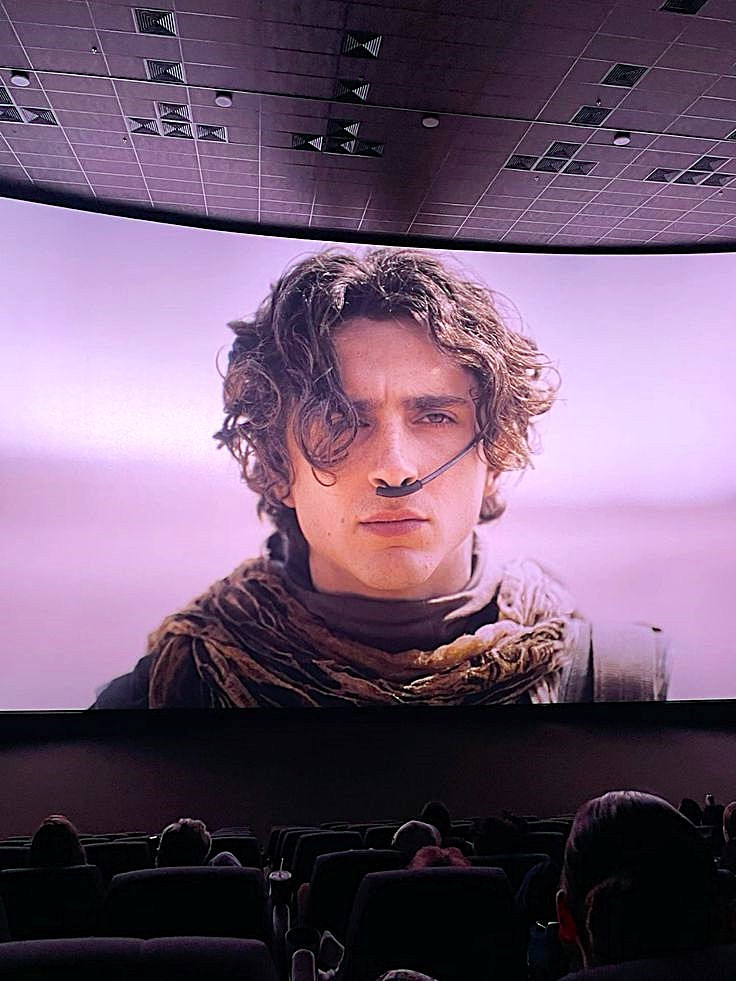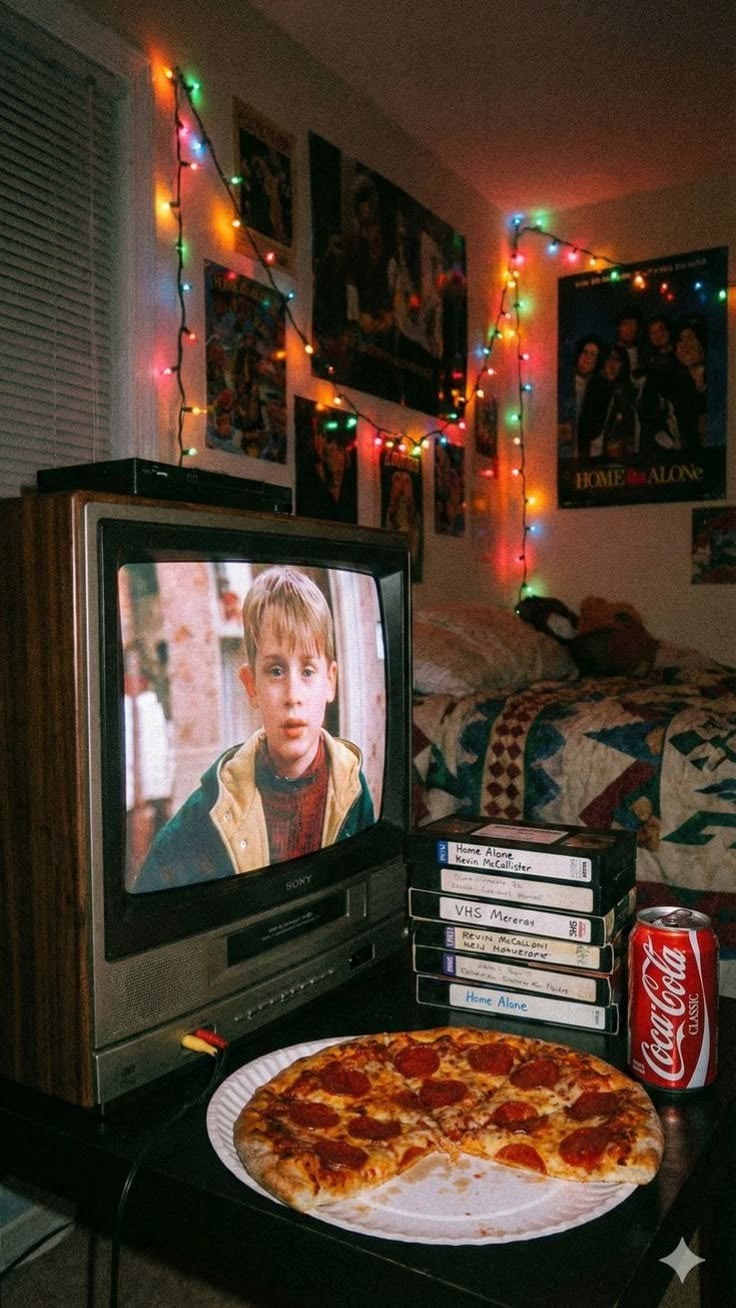
From the “Cultural Reflection” series
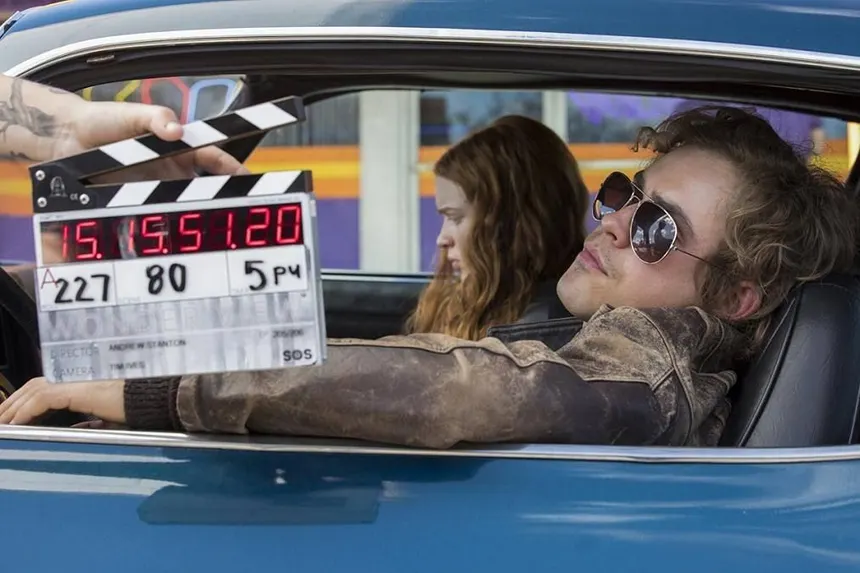
Billy steps out of his car slowly. Short hair in front, long in back, a confident look, and three girls who can’t take their eyes off him.
A brief moment, but you feel something. You don’t know its name exactly. It’s not admiration for Billy himself — he’s not the kindest character in the show. It’s a strange longing for a time you never lived.
Have you felt this before? You watch a show set in 1985 and wish you were there. You search your closet for baggy jeans or a loud-colored jacket. You open your phone and look up a forty-year-old song, and find yourself singing along to its words.
What is this magic? And who made it? Come, let’s open the door and learn the secret.
Longing for a Home You Never Lived In
Before talking about fashion, let’s understand the feeling itself. Svetlana Boym, a literature professor at Harvard University, spent years studying nostalgia and wrote a book called The Future of Nostalgia. In it, she defined it with a simple, wonderful line:
“Longing for a home that no longer exists, or never existed.” — Svetlana Boym, The Future of Nostalgia
Stop at the last part: or never existed. That is, your heart can long for a place you’ve never entered. And that’s exactly what Stranger Things does to us.
The Duffer Brothers’ Genius: They Made a Feeling, Not a Show
There’s a beautiful paradox: the show’s creators themselves never lived that era. Matt and Ross Duffer were born in 1984, a year after the time the story takes place (Rolling Stone). Both longed for a world they knew from films more than from reality.
So what did they do? When they wanted to convince people of their idea, they didn’t write a long summary. They made a trailer from about 30 old films, cut its scenes and glued them to tell the show’s story. They didn’t explain the idea in words. They gave people the feeling directly.
And here lies their genius. They don’t copy the eighties as they were, but copy our feeling when we watch its films. As producer and director Shawn Levy, who worked on the show, said, it’s nostalgia for eighties films, and perhaps more so, nostalgia for real life in those days (Den of Geek).
About those films, Matt Duffer says that when they watched them, “we felt we had entered another world” (SciFiNow). And that’s what they wanted to give us: a ticket to a childhood that belongs to no one in particular.
So you find bicycles, secret hideouts, and kids talking on walkie-talkies at night in the show. These aren’t decoration. They’re keys that open childhood’s door for every viewer, whether born in 1975 or 2005.
Clothing: A Piece of Fabric That Carries a Memory
Let’s move on to what we came for: fashion. I’ll start with a story that sums it all up.
In the second season, the kid Dustin appeared wearing a purple jacket with a dinosaur on it. It wasn’t a new design, but an actual jacket sold by the Science Museum in Minnesota in the early eighties. Costume designer Kim Wilcox found it while looking for inspiration, and said the team “found an old copy online” (WGN).
The result? Viewers flooded the museum’s website with requests until it crashed, so the museum decided to resell these jackets (NME, CNBC).
Think about this for a moment: a piece of fabric that appeared on screen for minutes made thousands want to own the past.
And the details go deeper. In the first season, costume designer Kimberly Adams cared about the clothes’ age itself. Will’s clothes looked old and hand-me-down, while Mike’s were newer because his mother bought them at the start of the school year (Tyranny of Style). You don’t notice this consciously, but your mind picks it up and understands each child’s story without a word.
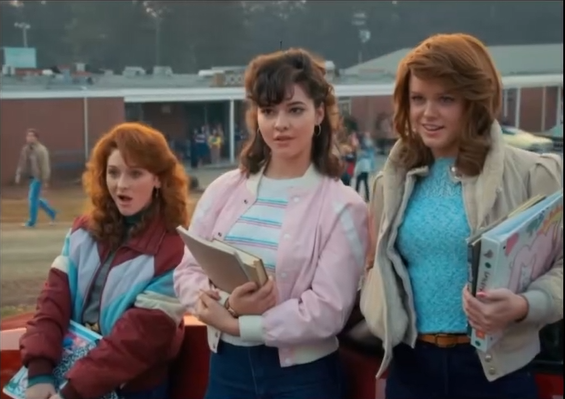
And in the Halloween episode, Ghostbusters costumes were handmade for each character separately (Bloody Disgusting). And Amy Paris, costume designer for later seasons, uses real eighties references, including old school yearbooks (Parade). And she designed a shirt for Eddie that expresses the metal and rebellion spirit of that decade (V&A).
The idea is one: no one here wears a “costume.” Every piece reminds us of something.
Hairstyles: Hair That Declares Who You Are
I promised to return to Billy, and his hair is the second star of the scene. It’s called a “mullet.” And after season four, this hair returned to the streets, as academics Tom van Laer from the University of Sydney and David Christian Orazi from Monash University noted. And with it came the hair crimping Nancy and Karen Wheeler appeared with, and the famous small banana-shaped hair clip (Daily Maverick / The Conversation).
Why does the hairstyle affect us this much? Because hair is the first thing we see in any face. And in the eighties, hair was a statement: I’m rebellious, I’m calm, I’m a rock fan. And so Billy’s hair seems bigger than a haircut. It’s a full sentence spoken before he opens his mouth.
The Atmosphere: When the Sound of the Past Returns
And the atmosphere has its music. After season four, Kate Bush’s “Running Up That Hill” topped Spotify charts, joined by Metallica’s “Master of Puppets” (same source). Two songs nearly four decades old, topping charts of a generation that wasn’t even born when they were released.
And this isn’t a coincidence. This is the recipe: a robe, then hair, then a song, then an old game, and all say the same thing: come, this home is yours.
What Scientists Say?
Three voices explain this magic to us.
First: nostalgia gives us belonging. Psychologists Constantine Sedikides and Tim Wildschut from the University of Southampton described nostalgia as a bittersweet feeling, but “sweeter than it is bitter” (their research). And their team’s studies showed nostalgia raises people’s sense of meaning in life, and that this happens through feeling part of a group (2011 study). That is, we don’t escape to the eighties only. We’re looking for a place to belong.
Second: borrowed memory. Psychologist Zahal al-Najjar calls this phenomenon “second-degree nostalgia”: an emotion formed from excessive watching rather than experience. And she says: “Over time, this exposure may start to take the place of memory” (AUD). And the same article cites a 2023 Harris poll that 60% of Gen Z adults said they prefer returning to a time before widespread digital connection.
Third: we wear the past to pretend we were there. Van Laer and Orazi call this “false nostalgia.” Today’s youth consume eighties culture to live the longing for that era, as if they were part of it. And a purple neon hat and a wide protective jacket from the show’s collaboration with brand “Quiksilver” were sold around the world. Then they remind of an important truth: “This is not the real eighties” (same source).
Was the Eighties Really This Beautiful?
Honestly? Not quite. The eighties in the show is a sanitized version: beautiful colors, great music, friends who never part. Worry, heavy news, and the boredom of ordinary days have no place on screen.
And this doesn’t detract from the Duffer brothers’ genius. It explains it. They know people don’t long for reality, but for the feeling. And Ross Duffer himself says choosing the eighties was for specific reasons and that it “wasn’t just pure nostalgia” (Vice). And for these reasons, as he said in another interview, friends in those days used to meet by knocking on the neighbor’s door, and everything took longer (Hot Press). A beautiful slowness we don’t know today.
Our Eighties
And in the end, each of us has their own eighties, even if they never lived it. Open your family photo album: faded colors, uncles with thick mustaches, mothers with voluminous hairstyles, cassette tapes in a room corner. Maybe our longing for the show’s eighties is really a mask for a closer longing: to see our parents young, and to know who they were before we were.
Conclusion
Stranger Things wasn’t just a show about the eighties. It was a memory machine made by two men who know the heart doesn’t ask: were you there? but asks: did you feel this before?
And you, after all this, try asking yourself: what piece do you wear today that makes you feel a time you never lived? Write to us in the comments, and send the article to a friend who knows this feeling.
References
Sources and quotes in their original English.
- Svetlana Boym, The Future of Nostalgia (2001), quoted in a UCL paper.
- Rolling Stone: The Duffer Brothers’ birth in 1984
- NPR/WYPR: The trailer from about 30 films
- Den of Geek: Interview with Shawn Levy
- SciFiNow: Interview with the Duffer Brothers
- Vice: Ross Duffer
- Hot Press: That Eighties Show
- WGN, NME, CNBC: Dustin’s jacket story
- Tyranny of Style: Interview with Kimberly Adams
- Bloody Disgusting: Kim Wilcox and the Halloween episode
- Parade/AOL: Amy Paris
- V&A: The show’s best costumes
- van Laer & Orazi, The Conversation via Daily Maverick (2022)
- Sedikides & Wildschut, Finding Meaning in Nostalgia
- Routledge et al. (2011), Nostalgia as an Existential Resource
- AUD Center: Why Gen Z Is Nostalgic for a Past They Never Lived